

个人简介
怀玉公主


推荐博文
家和万事兴
2026-08-26
分类: 鲁豫有约
家和万事兴
Chinese FM urges greater progress in China-South Korea strategic cooperative partnership_我的网站

A |

China and India have considerable scope for cooperation in the field of artificial intelligence (AI), as their AI capabilities are complementary in many respects, a senior Indian investor told the Global Times in an exclusive interview.
There is considerable scope for AI cooperation in areas that address common global challenges, including healthcare, education, agriculture, climate resilience, industrial productivity and scientific research, always within the policy frameworks established by the respective governments and international perspectives on responsible and secure AI, Mahendra Swarup, founder of VG Capital and former president of the Indian Venture and Alternate Capital Association, told the Global Times on Wednesday.
AI is likely to become one of the defining technologies of this century. India's strengths lie in software development, engineering talent, digital public infrastructure and entrepreneurial innovation. China has developed significant capabilities in AI applications, hardware, manufacturing and large-scale deployment. "These capabilities are complementary in many respects," Swarup said.
The veteran on the front line of India's venture capital investment sector made the remarks amid improving bilateral ties and a certain level of liberalization of Chinese investments in India.
Chinese investors have historically contributed to the growth of several successful Indian companies, especially start-ups. While investment activity has been moderated by regulatory developments over the past few years, there has always been underlying interest in the Indian market because of its long-term fundamentals, Swarup said.
"If the recent improvement in bilateral relations leads to greater regulatory clarity and business confidence, the Chinese investors will once again evaluate opportunities in India, although the general sentiment is one of cautious optimism," said Swarup.
Amid positive momentum in bilateral relations, Swarup noted rising opportunities for entrepreneurs from the two countries to engage in practical cooperation.
There are several areas where entrepreneurs from India and China could potentially complement each other's strengths, subject to the regulatory frameworks of different sectors in both countries, the investor said, highlighting areas including healthcare technologies, clean energy, electric mobility, advanced manufacturing, climate technologies, industrial automation, logistics and supply-chain innovation.
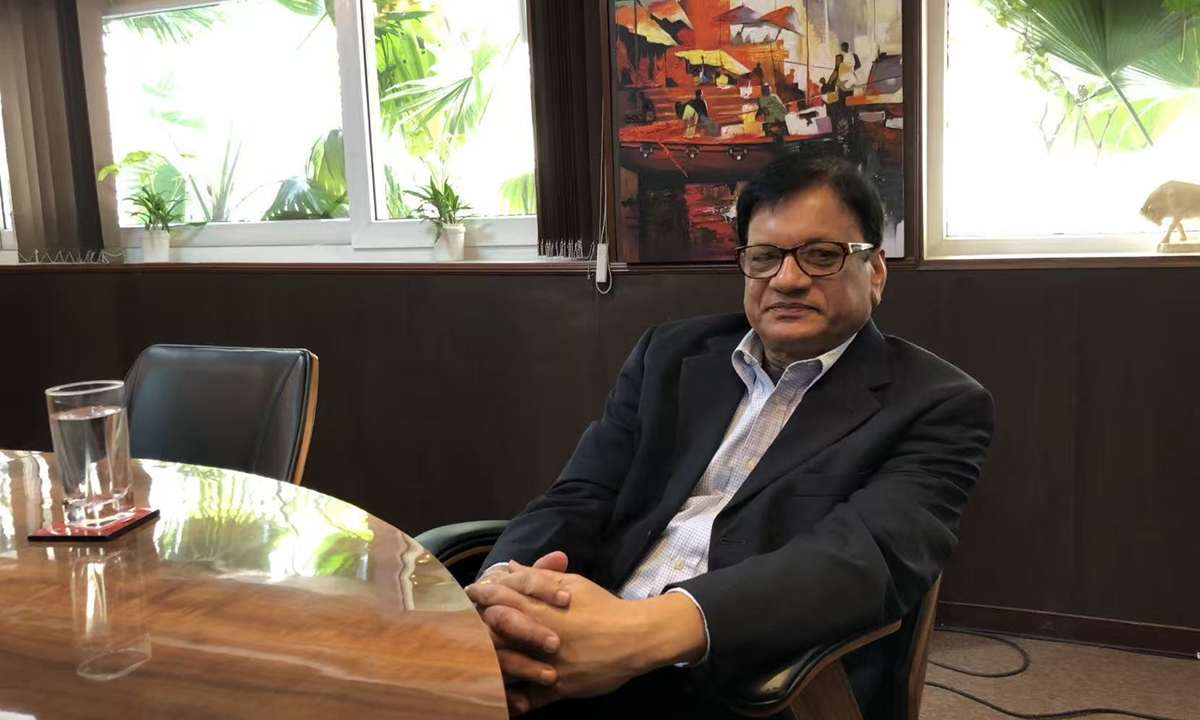
"In whichever sector the complementary strengths of both China and India can be brought together responsibly, they can create value not only for both countries but also for global markets," said Swarup.
India has recently shown signs of easing some long-standing restrictions on trade and investment with China, with Chinese experts saying that the move reflects the country's growing recognition of China's importance to its economic development, and a desire to create a more favorable environment for improving bilateral ties.
There has been a gradual policy adjustment, including easing restrictions on foreign direct investment (FDI) in e-commerce, allowing FDI from companies with Chinese ownership, The Hindu reported on August 1.
With India set to host a BRICS summit this year, Swarup also said that Indian and Chinese companies can work together to promote the interests of developing countries.
India and China are both major economies with significant experience in addressing the challenges of development at scale. Although each country has followed its own development path, there are areas where companies from both nations can contribute meaningfully to broader development across Asia, Africa and other emerging markets, Swarup noted.
There is considerable potential for collaboration in affordable healthcare, digital financial inclusion, renewable energy, agricultural technologies, education technology, infrastructure, supply-chain development and support for small and medium-sized enterprises. These are areas where scalable and affordable solutions can have a significant impact on improving livelihoods, the veteran said.
Partnerships that combine technology, entrepreneurship and long-term investment can help create solutions that are both commercially sustainable and socially impactful. "As two of the largest economies in the Global South, India and China have the opportunity to contribute positively to sustainable development through innovation, responsible investment and constructive commercial engagement," Swarup said.
。 Chinese Foreign Minister Wang Yi said here on Thursday that he hopes South Korea will firmly pursue a friendly policy toward China and take the 35th anniversary of the establishment of diplomatic relations between the two countries next year as an opportunity to make greater progress in the China-South Korea strategic cooperative partnership. Wang, also a member of the Political Bureau of the Communist Party of China Central Committee, made the remarks when meeting with South Korean President Lee Jae Myung in Seoul. Wang said the comprehensive restoration of China-South Korea relations and positive progress made since the beginning of this year have demonstrated that a rational, pragmatic and positive policy toward China fully serves South Korea's interests and is in keeping with the trend of the times. As an important force for maintaining world peace, China consistently advocates the political settlement of international and regional conflicts through dialogue, Wang said, adding that China is also a major stabilizing force, providing valuable certainty for the world. Wang also noted that China is ready to share development opportunities with all countries, especially its neighbors. Amid growing global economic fragmentation and rising trade protectionism, Wang pointed out that China and South Korea should set an example by concluding the second phase of Free Trade Agreement (FTA) negotiations at an early date to promote regional economic integration and universally beneficial and inclusive economic globalization. For his part, the South Korean president said that he was glad to see China-South Korea relations improving and developing rapidly, with strong growth momentum in economic and trade cooperation. While highlighting that people-to-people exchanges between the two countries are expected to exceed 10 million this year, Lee said that South Korean public perceptions of China are improving and there are growing expectations for strengthening comprehensive cooperation with China. Amid the current international situation, Lee said that stronger strategic cooperation between South Korea and China serves the fundamental interests of both countries and is important for regional peace and stability. South Korea and China should become mutually dependent and mutually beneficial partners with complementary strengths, Lee said, adding that the two countries need each other in areas such as economy, trade and security. Lee said he looks forward to visiting China's Shenzhen City in November for the 2026 APEC Economic Leaders' Meeting, calling it an important opportunity to work with China to advance the South Korea-China strategic cooperative partnership to a new level. During the visit, Wang also met with South Korean Foreign Minister Cho Hyun and Wi Sung-lac, South Korea's top presidential national security advisor.

 。
。Current article:http://hxqx9bc.miaorediancuisuilianzouguang.cyou/s30r/20260826/3622.html
Published on:22:11:49
相关热门文章
- 国家防总针对广东提升防汛应急响应至三级 调运装备支援巡堤查险
- 西甲第33轮裁判:奥尔蒂斯执法巴萨,何塞-桑切斯执法皇马
- (经济观察)海南商业航天加速起势 中外企业纷落子,(经济观察)海南商业航天加速起势 中外企业纷落子
- 全市攻坚清理影响振兴发展问题工作会议召开
- 科兴制药核心技术人员尚维减持2000股,减持金额4.41万元


